The Promise, Kept: How SpineDAO Built — and Owns — FILTER
In January 2025 we made two promises. FILTER is where they meet.
When we introduced SpineDAO, we committed to two things that sounded, at the time, like they belonged to different conversations. First: to confront the wait times and the crushing non-surgical burden that make spine care slower and costlier than it should be. Second: to build a value-capture model in which the community that creates clinical knowledge actually owns it. FILTER is where those two promises converge.
The problem we said we’d attack
Walk into almost any spine surgeon’s clinic and you’ll find a quiet mismatch: the large majority of people in the waiting room will never need surgery. Published estimates put it at up to 85% of referrals — in some clinics closer to 90% — who are not surgical candidates at all.¹ Many have waited four months or more just to be seen,² only to be redirected toward the care they needed from the start.
That mismatch is a burden on everyone at once:
- Patients lose months in a queue for the wrong door, delaying the appropriate treatment — physiotherapy, pain management, another specialty — they could have begun sooner.
- Surgeons carry an unsustainable consultation load, working through enormous volumes of non-surgical patients to reach the few who need the operating room.
- Payers — insurers and public systems — reimburse consultations that don’t lead to treatment and frequently trigger a second referral, paying twice to reach the same answer.
Nobody designed this. It’s what happens when the order and routing of patients is left to first-come, first-served.
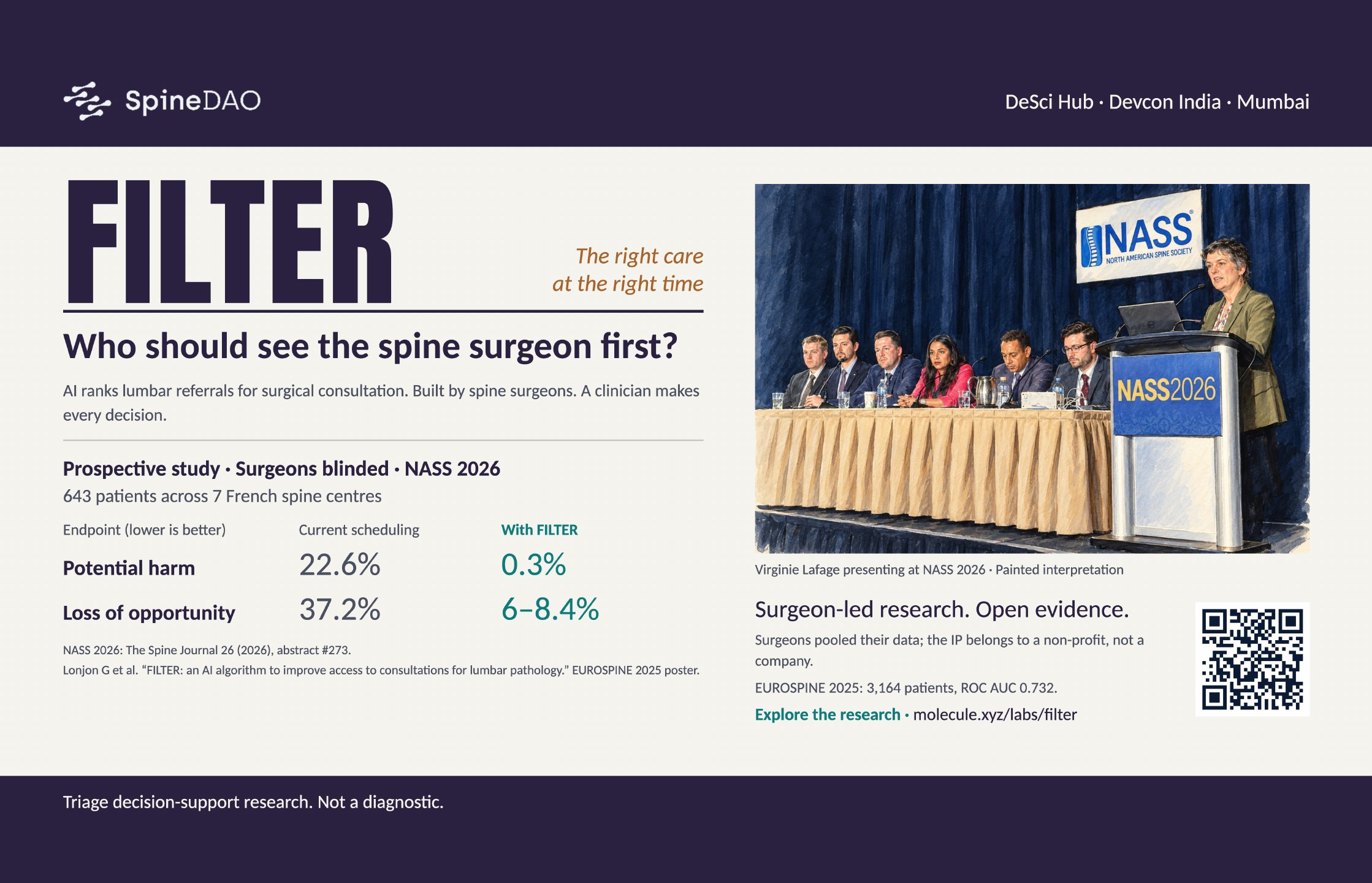
FILTER was built to help. It’s a scheduling aid: from a short set of clinical inputs gathered before the visit, it produces a prioritisation score that helps clinics organise consultations, so specialist time is used where it’s most needed and patients reach the appropriate care pathway with less delay. FILTER does not diagnose and it does not decide — the clinician makes every decision about a patient’s care. It simply helps the system route attention where it belongs.
The science: surgeon-built, in the open
What makes FILTER credible isn’t that it uses AI — plenty of things do. It’s how it was built.
FILTER was developed by a community of spine surgeons on more than 3,000 de-identified patient records from real clinical practice. Each patient is described by a compact set of standardized, mostly patient-reported measures — including the Oswestry Disability Index, which proved one of the strongest signals. The surgeons weren’t just data donors; they were in the loop, shaping which variables mattered and which model to trust. Through successive rounds the feature set was pruned from twenty variables to ten, and a neural-network model was selected. The output is a single prioritisation score from 0 to 100.
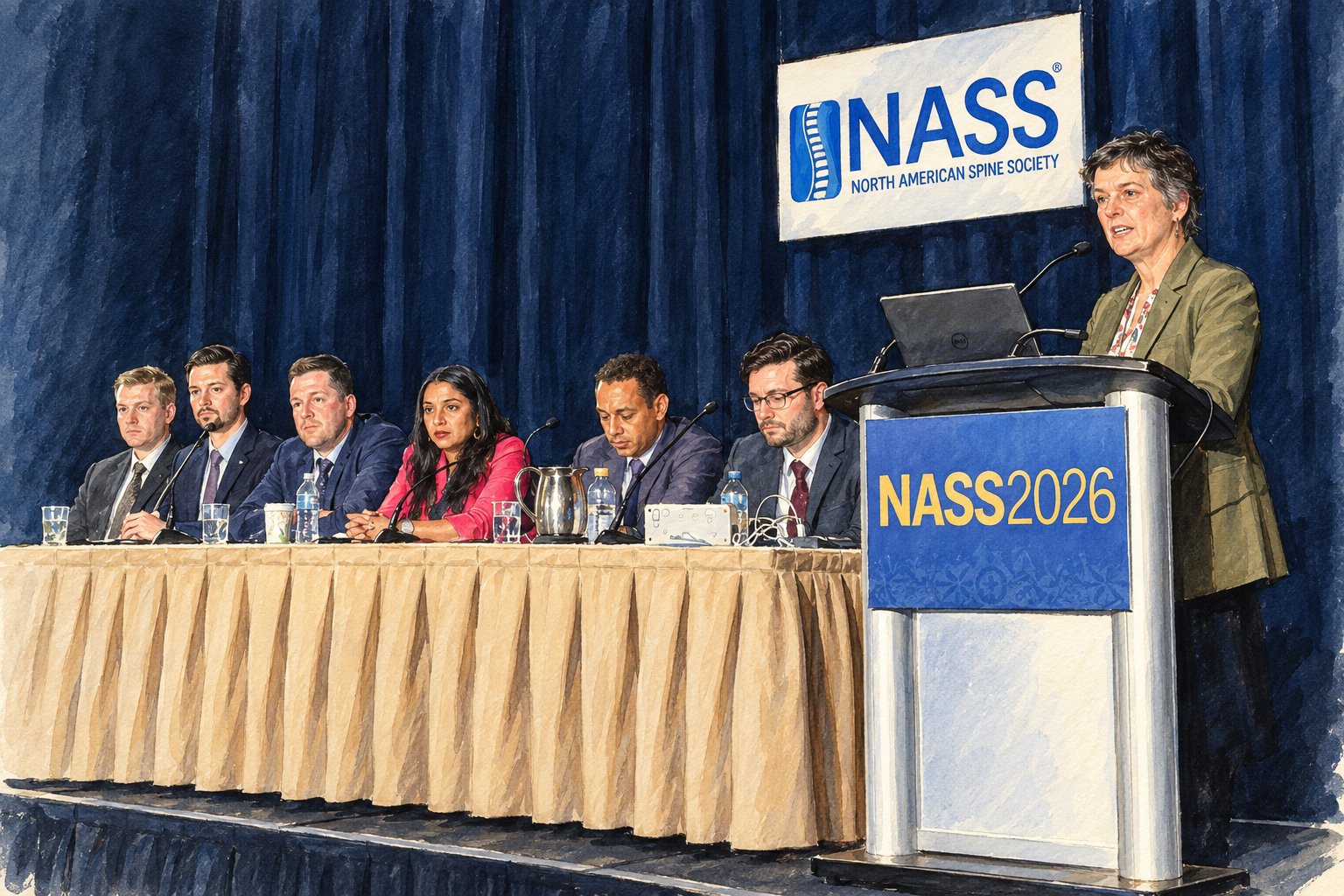
It wasn’t left on a lab bench. The research from which FILTER derives has been presented at SFCR 2025, EUROSPINE 2025, and NASS 2026 — the last a prospective, multicentre study across seven French spine centres, with surgeons blinded to the score. That’s an unusually rigorous path for a tool of this kind, and it’s what separates a real clinical research program from a demo.
The value model we said we’d build
Here is the part that is genuinely new — and it isn’t the algorithm.
The intellectual property in FILTER belongs to SpineDAO, a non-profit Swiss association, and is registered on-chain as an IP-NFT through Molecule. We’ve now licensed FILTER to VECTOR SAS to bring it into clinics. In return, SpineDAO keeps the IP and earns a royalty — and that royalty is designed to fund the next study.
Read that as a cycle:
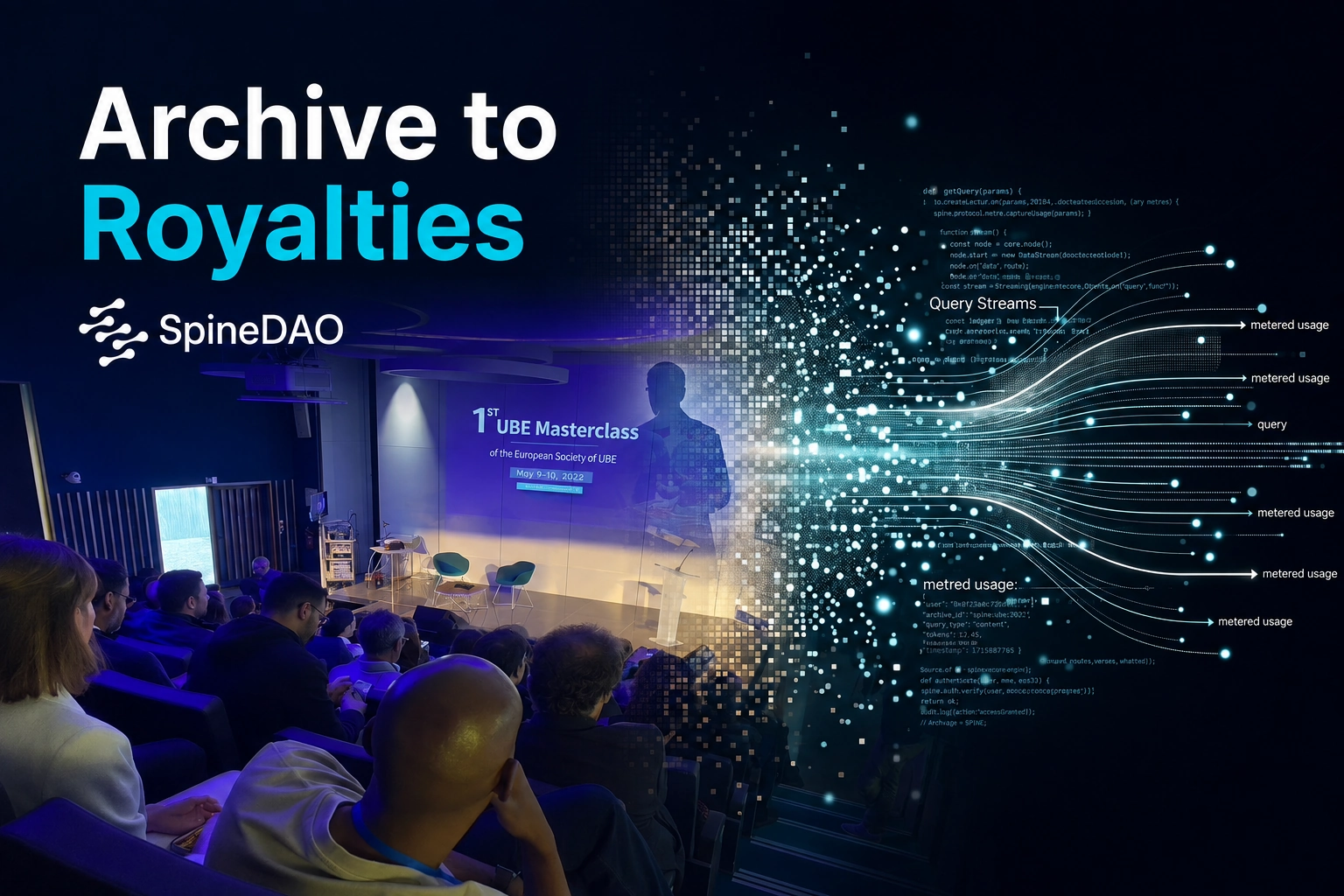
Community clinical data → a model the community owns → on-chain IP → a commercial licence → a royalty that funds more research
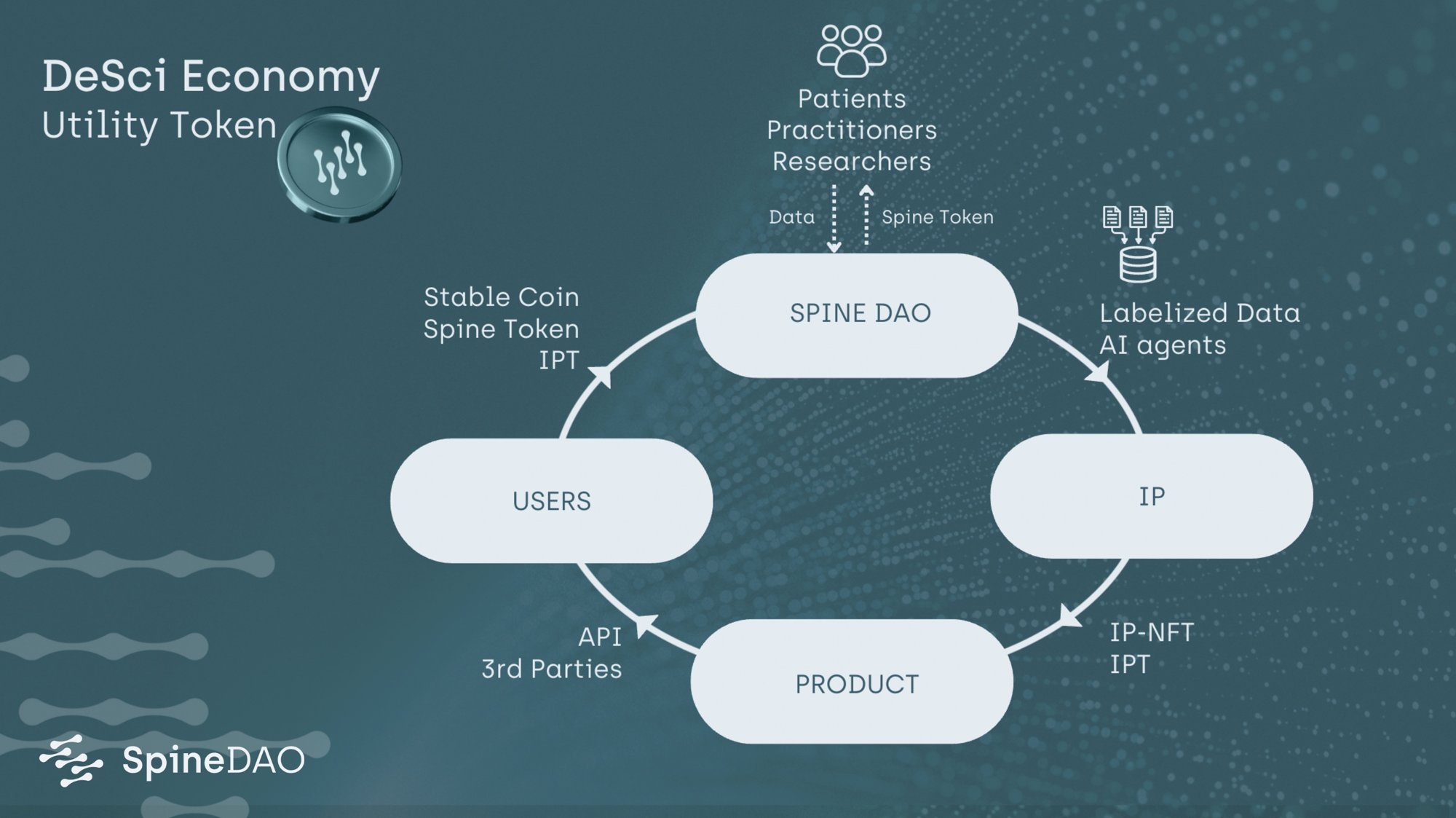
That’s the DeSci loop, and FILTER closes it end-to-end. Not with a speculative early-stage asset, but with a clinically-grounded tool that has already been through prospective, multi-site study and sits under a signed commercial agreement. This is the value-capture model we described at the start — no longer a diagram, but a working circuit.
What it means for DeSci
Most of decentralized science, so far, has been about funding research — pooling capital to back work that would otherwise struggle to get off the ground. That’s valuable. But it leaves the hardest question unanswered: once the science works, who owns it, and where does the value go?
FILTER is a concrete answer. The people who generated the knowledge — the clinicians — collectively own the asset it became. The value doesn’t disappear into a startup’s cap table or behind a paywall; it returns, on-chain and auditable, to the community that created it, and it compounds into the next piece of research. That’s a more durable model than grants or token sales alone: science that owns its own output and recycles the proceeds into more science.
And it generalizes. The same structure — community data, community-owned IP, a licensee that carries the regulatory and commercial load, and a royalty that flows back to a non-profit — can be rebuilt in other musculoskeletal fields and, eventually, far beyond spine. FILTER isn’t just a product; it’s a template for how a research community can fund itself without giving itself away.
What’s next
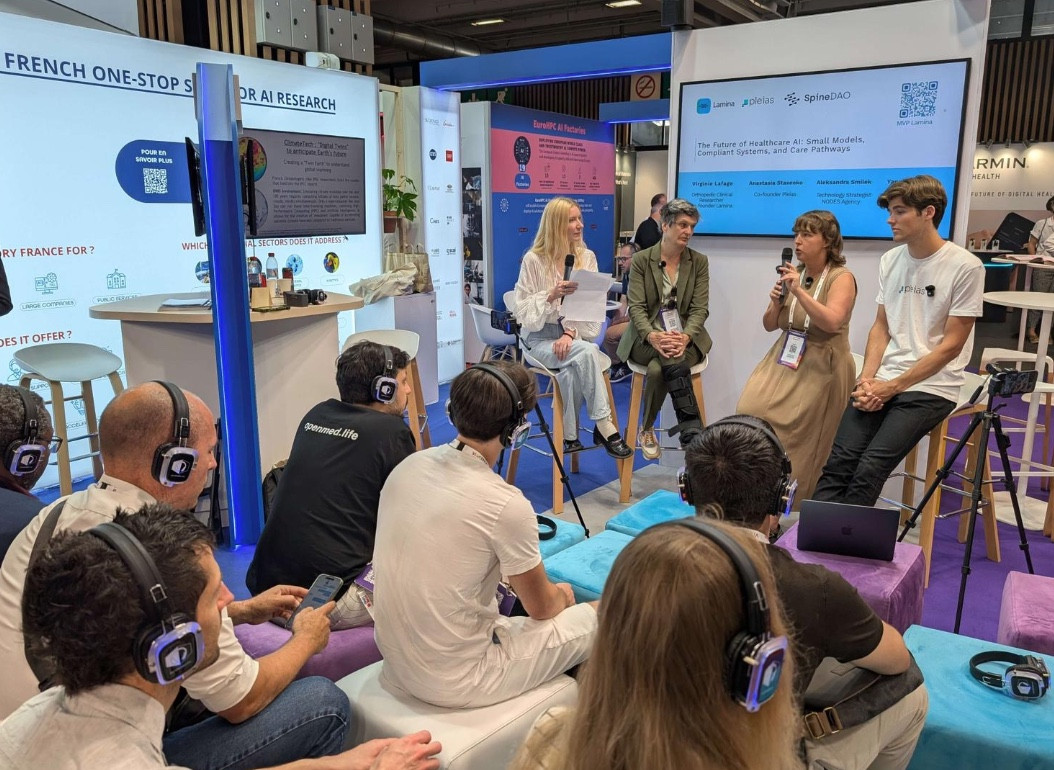
We brought this story to the community in person at the Devcon DeSci Hub in Mumbai, alongside Bio, DeSci India and DeSci Asia — presenting FILTER and the loop behind it, and taking the community’s questions in a live AMA. The response told us the same thing the data does: people are ready for science that owns what it builds.
We’ll keep delivering against the rest of what we promised: richer inputs, broader models, and the same ownership model extended into adjacent fields. The deeper work is in the structure — making the loop reproducible, so the next research community doesn’t have to invent it from scratch.
The lab is open: molecule.xyz/labs/filter. If you’re a clinician, a builder, or just someone who believes the people who create knowledge should own it — come build the loop with us.
FILTER is a scheduling aid that produces a prioritisation score to help organise appointments. It is not a medical device and makes no diagnosis; a clinician makes every decision about a patient’s care. SpineDAO is a non-profit association. This post is informational only and is not an offer, solicitation, or recommendation regarding any token or security.